Prusament PETG ESD: static-dissipative filament for electronics tooling
Prusa has introduced a PETG ESD filament containing carbon nanotubes and reinforcing carbon fiber for electronics enclosures and production fixtures.
Prusa has introduced a PETG ESD filament containing carbon nanotubes and reinforcing carbon fiber for electronics enclosures and production fixtures.
Why electrostatic dissipation matters
Charged plastics used in electronics manufacturing or repair can discharge into sensitive components. Prusament PETG ESD, introduced on November 10, 2026, is designed to dissipate accumulated electrostatic charge rather than carry large currents. Intended uses include enclosures, trays, assembly frames and production fixtures.
Prusa uses carbon nanotubes for the dissipative behavior and reinforcing carbon fiber for dimensional stability. Published figures include a volume resistance of 7.7 × 10⁶ Ω and surface resistance measurements of 7.1 × 10⁵ and 1.6 × 10⁶ Ω on two examined surfaces. These are material data under stated test conditions, not automatic certification of any finished printed assembly.
Print settings and trade-offs
Prusa specifies a nozzle temperature of 265 ± 10°C and a bed temperature of 90 ± 10°C. Abrasive carbon reinforcement calls for a hardened nozzle, with 0.4 mm recommended. Because the material absorbs moisture, the manufacturer suggests drying at 65°C for six to eight hours before printing.
Improved dimensional stability and low warping come with a trade-off: Prusa states that toughness is lower than for standard PETG. Material choice should therefore follow the mechanical loading of the actual part, not simply the ESD label.
Applications in real workshops
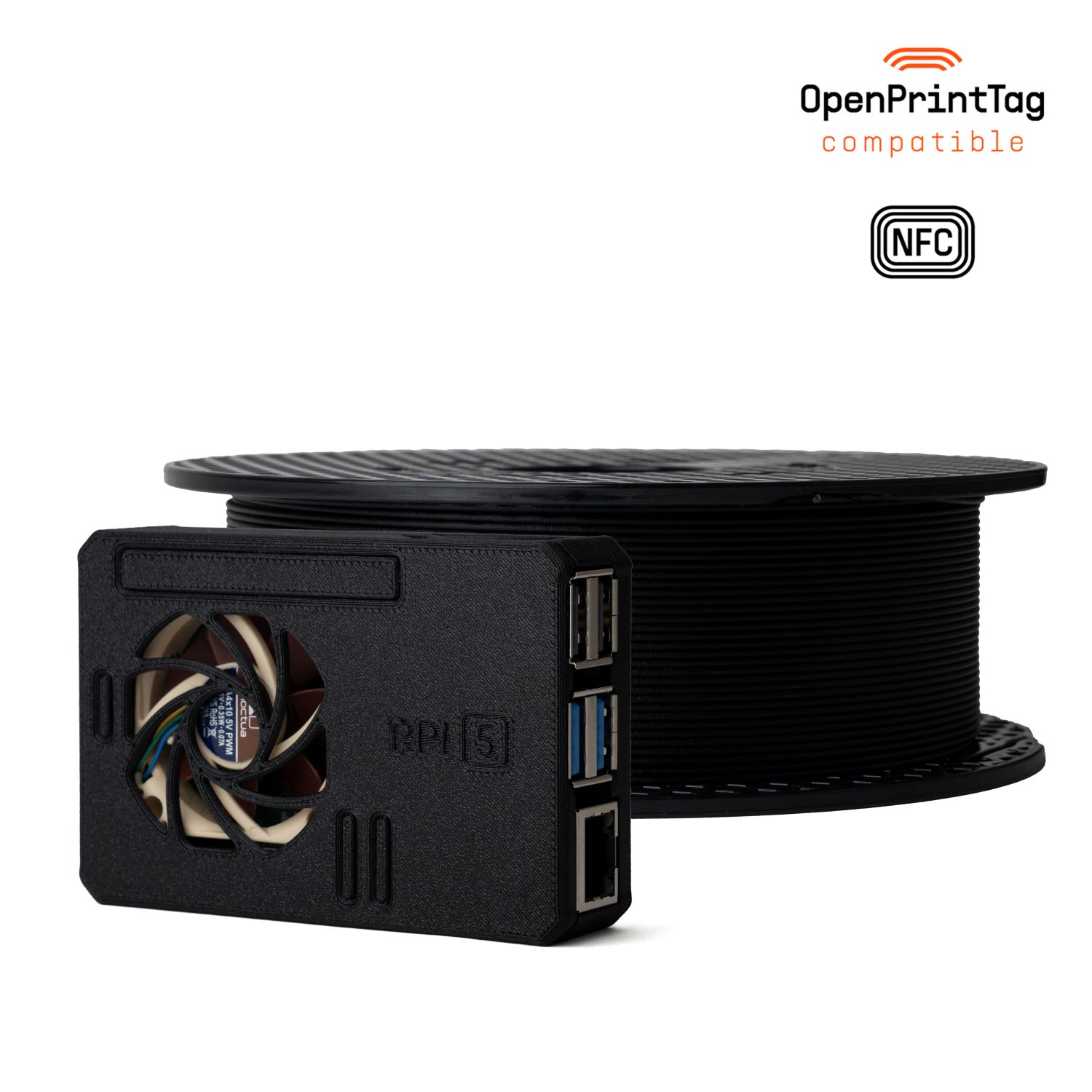
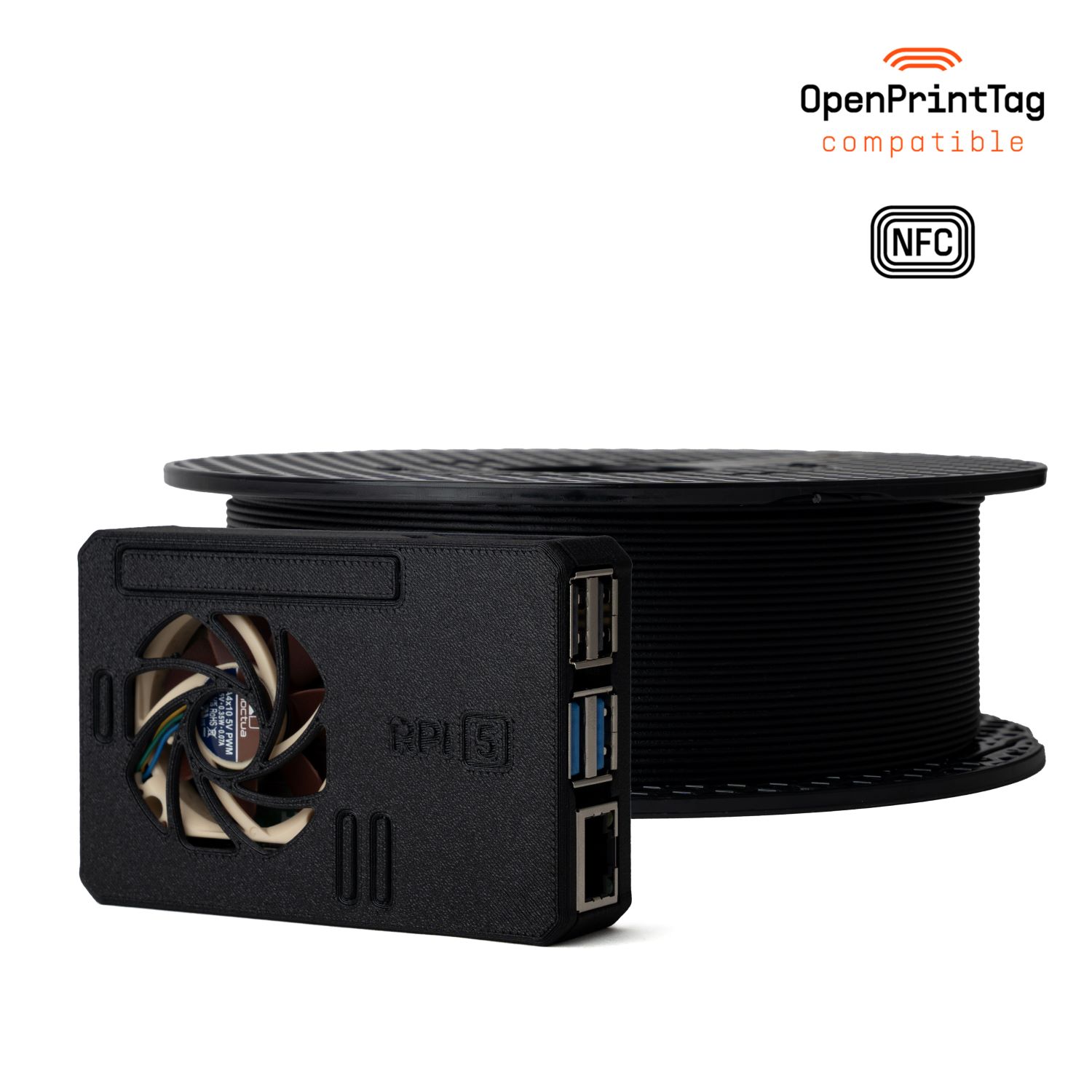
Prusa illustrates the product with a Raspberry Pi enclosure and fixtures for SMT production. It also used the filament to prototype a device for controlling excess powder during sheet coating, before replacing the prototype with a metal production fixture. That is a useful demonstration of additive manufacturing as an agile tooling process, not just a source of end-use parts.
For an electronics workshop, 3DPS would additionally verify the electrical behavior of the completed print, the grounding concept and applicable ESD requirements. Choosing the correct filament does not by itself qualify an entire workstation as ESD-safe.
Sources and further information
- https://www.prusa3d.com/product/prusament-petg-esd-black-1kg/
- https://3dprinting.com/news/prusa-launches-prusament-petg-esd-a-carbon-filled-3d-printing-filament-for-electronics/
Original manufacturer source image (Prusa Research): https://www.prusa3d.com/content/images/product/b4f74137-355a-4786-b070-2c652d56f28d.jpg