Stratasys–Bambu Lab: $27.6 Million Jury Verdict
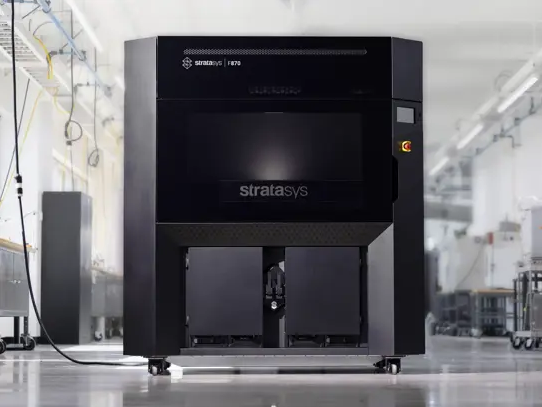
The September 17 US jury verdict concerns four patents. Final disposition and possible further remedies remain separate questions.
What happened?
A Texas jury sided with Stratasys in the first trial against Bambu Lab-related companies. The reported award for past damages is approximately $27.6 million.
What the verdict does not mean
The jury verdict is not itself an automatic sales ban and does not end all remaining proceedings.
Why it matters
The patent dispute concerns FDM features found across modern desktop printers.
Sources
Bambu Lab–Stratasys Patent Litigation – Summary
The patent dispute between Bambu Lab and Stratasys in the United States reached an important stage in September 2026. Stratasys asserted a total of ten U.S. patents across two separate litigation tracks involving Bambu Lab products.
In the first case, a federal jury in Texas found infringement of four Stratasys patents in connection with Bambu Lab's first-generation printer platforms.
1. Purge Tower / Prime Tower Technology
Patent: US 9,421,713
The patent covers an additive-manufacturing method involving multiple print heads or deposition lines and the management of material changes during printing. The process can include extruding excess material into a separate area commonly referred to as a purge tower or prime tower.
It is important to distinguish the patent claims from the general concept of a “purge tower”. The litigation concerned the specific processes defined by the patent claims.
2. Force Detection and Automatic Bed Leveling
Patents:
- US 9,168,698
- US 10,556,381
Both patents relate to force-sensing technology used during 3D printing. The technology detects physical interaction between the print head and the build platform and can be used for functions including automatic bed leveling.
The two patents were asserted separately, although they cover closely related technical areas.
3. Filling Small Gaps and Remnant Areas During Slicing
Patent: US 7,555,357
This patent primarily concerns slicing and extrusion toolpath generation. It addresses the handling of narrow remaining regions and voids within a printed layer that cannot be efficiently filled using ordinary full-width extrusion paths.
The technology therefore concerns primarily software and toolpath generation rather than a specific piece of Bambu Lab hardware.
Bambu Studio: official download page
What Happened to the Other Stratasys Patents?
The original U.S. litigation involved a total of ten asserted patents. These included technologies related to heated build platforms, networked 3D printing, camera and network functionality, tagged printing materials, and automatic printer-configuration detection.
PTAB Proceedings
Two other patents became particularly relevant in proceedings before the Patent Trial and Appeal Board (PTAB):
- US 9,592,660 – Heated build platform and system for three-dimensional printing methods
- US 8,562,324 – Networked three-dimensional printing
Bambu Lab challenged the validity of multiple patent claims before the PTAB. Some challenged claims were found unpatentable, while other challenged claims were maintained. It is therefore more accurate to say that Bambu Lab successfully challenged certain Stratasys patent claims, rather than stating that all related Stratasys patents were invalidated.
The Second U.S. Lawsuit
The ten patents originally asserted by Stratasys also include technologies that are separate from the four patents considered by the first jury trial.
These include, among others:
- RFID and tagged printing materials – US 10,569,466 and US 11,167,464
- Networked 3D printing and 3D scanning – US 8,562,324 and US 8,747,097
- Automatic printer-configuration detection – US 11,886,774
These technologies should therefore not be confused with the four patents covered by the September 2026 jury verdict.
The September 2026 Jury Verdict
On September 18, 2026, a federal jury in Texas ruled in favor of Stratasys in the first trial and found that the Bambu Lab-related defendants infringed the four patents at issue.
The verdict resulted in approximately US$27.6 million in past damages.
The verdict does not automatically mark the end of the broader patent dispute. Further court proceedings and appellate review remain possible, and Bambu Lab has indicated that it intends to pursue the available legal remedies.
Why Does This Matter to the 3D Printing Industry?
The significance of the case extends beyond the specific dispute between the two companies. The litigation concerns technologies that appear in many modern FDM/FFF 3D printers and their associated slicing software.
Purge towers, force-based automatic bed leveling, and certain slicing algorithms may appear to users as ordinary everyday printing functions. Behind these features, however, are complex technical and patent considerations.
The further development of the Bambu Lab–Stratasys dispute could therefore be relevant not only to the two companies involved, but also to the wider 3D printing industry.